What Is Agentic AI and Why It Matters in 2026
Learn what agentic AI is, how it differs from traditional AI, and why it is the biggest tech trend of 2026.
Key Takeaways
- Agentic AI refers to AI systems that can autonomously plan, execute, and iterate on tasks — not just respond to single prompts.
- Gartner projects 40% of enterprise applications will embed AI agents by the end of 2026, up from under 5% in 2025.
- The shift from prototype to production is driven by multi-agent systems, standardized protocols like MCP, and major investments from Anthropic, OpenAI, Google, and Salesforce.
- Practical use cases already include software development, customer service, business automation, and data analysis.
Agentic AI is the term you cannot escape in 2026 — and for good reason. After "agentic" was crowned word of the year in 2025, the concept has moved from buzzword status to something tangible: AI systems that do not just answer questions but actually get things done. They browse the web, write and debug code, manage files, call APIs, and make decisions without waiting for human approval at every step.
This is not a subtle shift. It represents a fundamental change in what AI systems can do and how businesses operate. If you work in tech, manage a team, or run a business, understanding agentic AI is no longer optional. Here is what you need to know.
What Exactly Is Agentic AI?
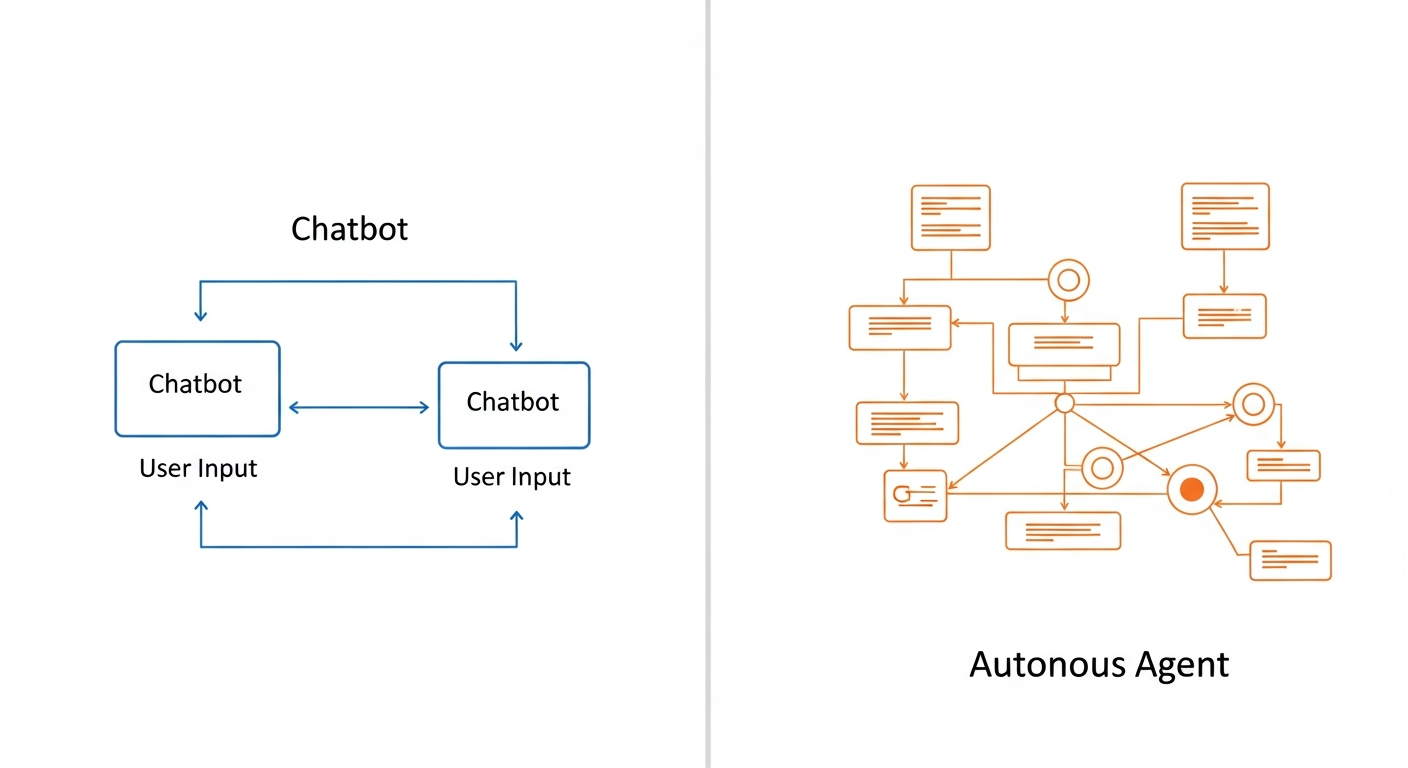
At its core, agentic AI describes artificial intelligence systems that operate with agency — the ability to independently pursue goals through planning, decision-making, and action. Think of the difference between a calculator and a project manager. A calculator gives you an answer when you type in a formula. A project manager takes a goal ("launch this product by Q3"), breaks it into steps, assigns resources, handles roadblocks, and adjusts the plan when things change.
Traditional AI works like the calculator. You give it a prompt, it gives you a response. One input, one output, done. Agentic AI works more like the project manager. You give it an objective, and it figures out the plan, executes each step, evaluates the results, and iterates until the goal is achieved.
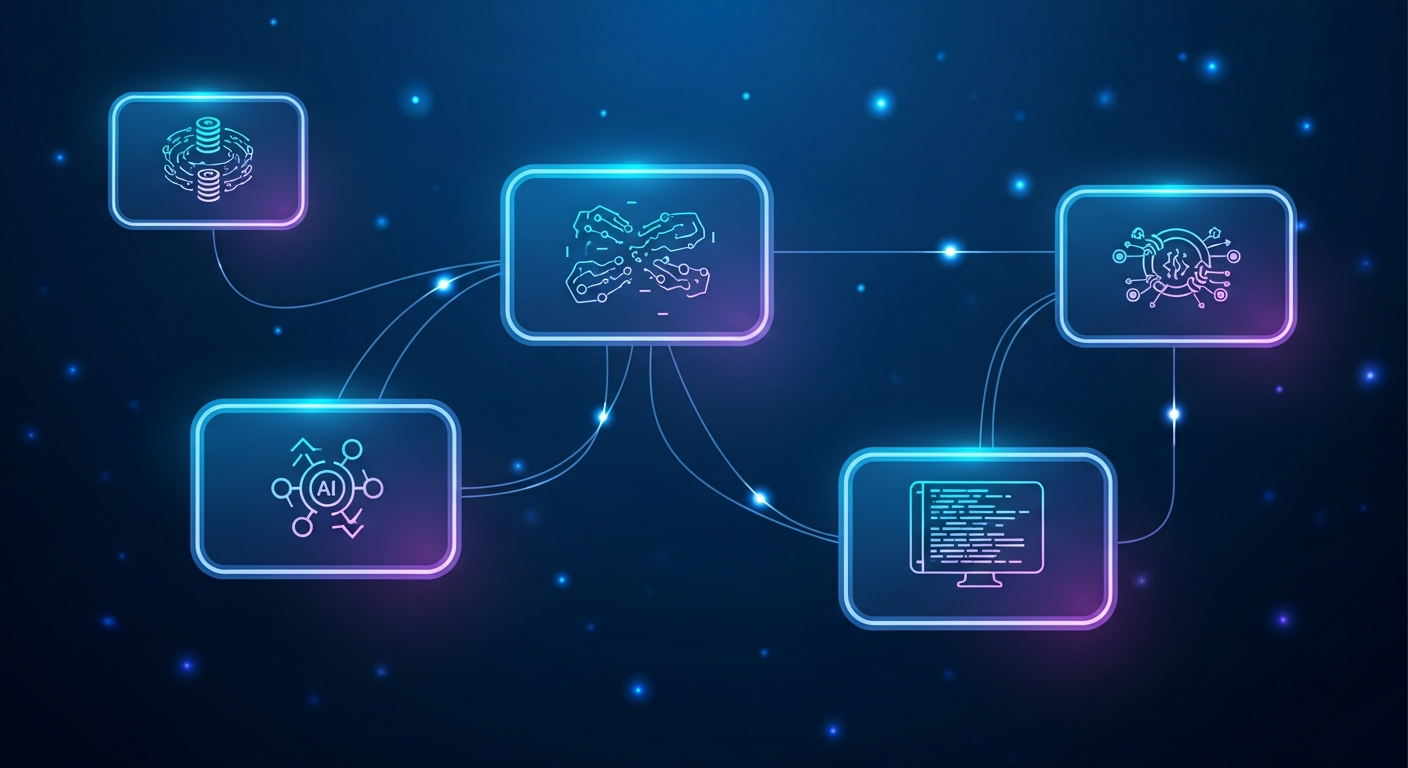
The technical architecture behind this involves several components working together:
- Planning module: Breaks complex goals into actionable sub-tasks
- Memory: Maintains context across multiple steps and sessions
- Tool use: Interacts with external systems — APIs, databases, file systems, web browsers
- Reasoning loop: Evaluates outcomes and adjusts strategy when something fails
- Autonomy controls: Guardrails that define what the agent can and cannot do without human approval
Traditional AI vs. Agentic AI: A Clear Comparison
| Dimension | Traditional AI | Agentic AI |
|---|---|---|
| Interaction | Single prompt → single response | Goal → plan → execute → iterate |
| Memory | Stateless (no context between calls) | Persistent memory across tasks |
| Tool Use | None or limited function calling | Browsers, APIs, code execution, file systems |
| Decision-Making | Human decides next step | Agent decides and executes autonomously |
| Error Handling | Fails silently or returns wrong answer | Detects errors, retries, adjusts approach |
| Scope | Single task (translate, summarize, classify) | Multi-step workflows and processes |
| Scalability | One query at a time | Orchestrates multiple parallel tasks |
Why Agentic AI Matters Right Now
The numbers tell the story. According to Gartner's 2026 projections, 40% of enterprise applications will have agentic AI capabilities embedded by the end of this year. That is an eightfold increase from less than 5% in 2025. This is not a gradual adoption curve — it is a step function.
Several factors are converging to make 2026 the breakout year:
1. The Infrastructure Is Finally Ready
Building AI agents in 2024 meant duct-taping together a dozen different tools, APIs, and prompt chains. In 2026, the tooling has matured. Anthropic introduced the Model Context Protocol (MCP), which has been described as the "USB-C for AI" — a standardized way for AI agents to connect to any tool, database, or service. Instead of building custom integrations for every tool an agent needs to use, MCP provides a universal connector.
This is similar to what happened with web APIs in the 2010s. Once REST became the standard, the number of integrations grew rapidly. MCP is doing the same for agent-tool connections.
2. Multi-Agent Systems Have Left the Lab
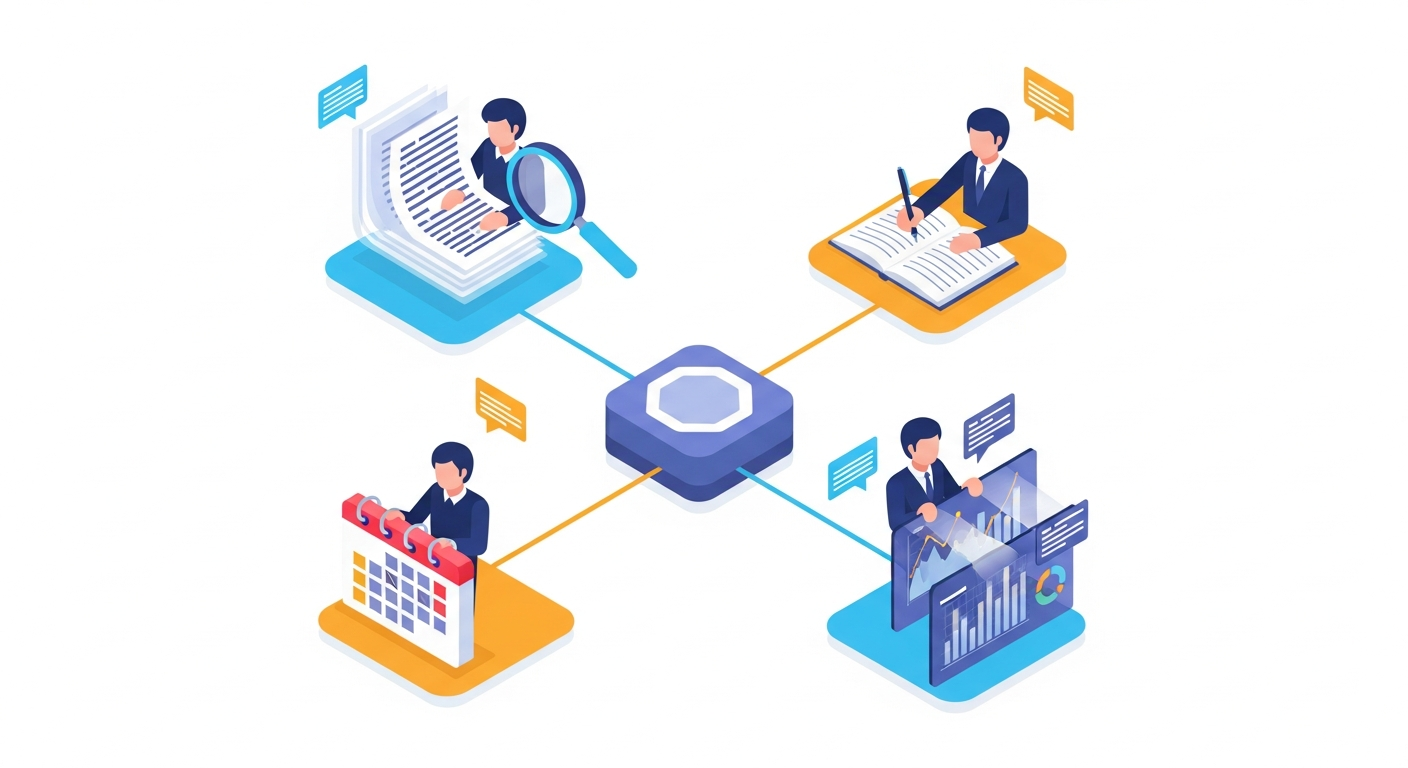
Single agents are useful. Multiple agents working together are Significant. In 2026, multi-agent systems have moved from research papers and prototypes into production environments. Teams of specialized agents — one that researches, one that writes code, one that tests, one that deploys — can handle workflows that would take a human team days or weeks.
The pattern looks like this: a lead agent receives a high-level objective, decomposes it into sub-tasks, delegates those tasks to specialist agents, monitors their progress, and synthesizes the results. Each specialist agent operates independently with its own tools and context, but they share a common communication protocol.
3. Every Major Player Is All In
This is not a niche technology being pushed by startups. The biggest names in tech are building their strategies around agentic AI:
- Anthropic shipped Claude with computer use capabilities and the Model Context Protocol, letting agents interact with desktop applications, terminals, and browsers directly.
- OpenAI has expanded GPT into agent-first architectures with persistent memory and tool-use capabilities.
- Google integrated Gemini agents across its cloud platform and workspace tools.
- Salesforce launched Agentforce, embedding autonomous agents directly into CRM workflows — handling lead qualification, customer support, and sales forecasting without human intervention.
When Anthropic, OpenAI, Google, and Salesforce are all converging on the same paradigm, it is a strong signal that the technology is ready for production use. If you want a deeper look at how these models compare, check out our comparison of ChatGPT, Claude, and Gemini.
Real-World Use Cases for Agentic AI in 2026
Theory is interesting. Practice is what matters. Here are the areas where agentic AI is already delivering measurable results.
Software Development
This is arguably the most advanced use case. AI coding agents can now take a feature request, analyze the existing codebase, write the implementation, create tests, run them, fix failures, and submit a pull request — all autonomously. The workflow has evolved beyond what some called "vibe coding" (where developers prompt AI and accept whatever comes out) toward what practitioners are calling the Objective-Validation Protocol: set a clear objective, let the agent work, then validate the output against defined criteria.
Tools like Claude Code, GitHub Copilot Workspace, and Cursor have made this workflow accessible to individual developers. But the real impact is at the team level, where multi-agent systems can parallelize backend and frontend development, with agents coordinating through shared API contracts.
Customer Service and AI Call Centers
Search volume for "AI call center" has surged year-over-year, with related term "AI contact center" up 350% in 2025-2026. The reason is straightforward: agentic AI can handle customer interactions end-to-end. Not just answering FAQs — actually resolving issues. An agent can look up a customer's order, check the shipping status, process a return, update the database, and send a confirmation email, all in a single conversation. When it encounters something outside its scope, it escalates to a human with full context already prepared.
Business Process Automation
Traditional automation (think RPA, Zapier, IFTTT) follows rigid rules: if X happens, do Y. Agentic AI handles the gray areas. An agent tasked with "process these invoices" can handle different formats, flag anomalies, reach out for clarification, and adapt its approach based on previous results. It is automation that thinks, not just executes.
Data Analysis and Research
Give an agentic AI system a research question, and it will search multiple databases, cross-reference findings, identify patterns, generate visualizations, and produce a structured report. The difference from traditional AI is persistence and iteration — if the first search does not yield useful results, the agent reformulates its query and tries a different approach.
The Technology Stack Behind Agentic AI
Understanding how agentic AI works under the hood helps separate genuine capability from marketing hype.
Large Language Models as the "Brain"
The foundation model (GPT, Claude, Gemini, etc.) provides reasoning, language understanding, and planning capabilities. But the model alone is not an agent — it is the reasoning engine that drives one. The quality of the underlying model directly affects the agent's ability to plan effectively and recover from errors.
MCP and Tool Integration
The Model Context Protocol deserves special attention because it solves one of the hardest problems in agentic AI: how does an agent interact with the world? Before MCP, every tool integration was custom. Need your agent to query a database? Write a custom function. Need it to call Slack? Another custom function. MCP standardizes this into a universal protocol, so any MCP-compatible tool can be used by any MCP-compatible agent.
The implications are significant. It means the ecosystem of agent capabilities can grow independently of any single AI provider. Tool developers build MCP servers once, and every agent can use them.
Edge AI: Agents on Device
Edge AI — running AI models directly on devices rather than in the cloud — is a fast-growing market projected to reach $47.59 billion in 2026, up 33% year-over-year. The relevance to agentic AI is latency and privacy. Agents that run partially on-device can respond faster and handle sensitive data without sending it to external servers. Expect to see more hybrid architectures where the planning happens in the cloud but execution happens at the edge.
Orchestration Frameworks
Frameworks like LangGraph, CrewAI, and Anthropic's own agent SDK handle the orchestration layer — managing agent lifecycles, routing tasks between agents, handling failures, and maintaining shared state. These frameworks have matured significantly in 2026, moving from experimental libraries to production-grade infrastructure.
Challenges and Limitations
Agentic AI is powerful, but it is not magic. Several real challenges remain:
- Reliability: Agents can still fail in unpredictable ways. A planning error in step 2 of a 10-step process can cascade into a mess. Production systems need reliable error handling and human-in-the-loop checkpoints.
- Cost: Agents use more compute than simple prompt-response interactions. A complex task might involve dozens of LLM calls, tool invocations, and retry loops. Cost optimization is an active area of development.
- Security: An agent with access to your codebase, database, and APIs has significant attack surface. Prompt injection, unauthorized actions, and data exfiltration are real risks that require careful guardrails.
- Observability: When an agent makes 47 decisions across 12 tools to complete a task, debugging what went wrong requires sophisticated logging and tracing infrastructure.
- Trust calibration: Knowing when to trust an agent's output and when to verify manually is a skill that organizations are still developing.
What This Means for Your Career and Business
If you are a developer, learning to build and manage AI agents is becoming as fundamental as learning to use version control was a decade ago. The developers who thrive will be those who can define clear objectives, design effective validation criteria, and orchestrate agent workflows — not just write prompts.
If you run a business, the question is not whether to adopt agentic AI but where to start. Customer service and internal process automation are the lowest-risk entry points. Software development augmentation offers the highest Use but requires more technical maturity.
If you are in a non-technical role, understanding what agents can and cannot do helps you collaborate effectively with technical teams. The ability to define clear objectives and success criteria is a human skill that becomes more valuable, not less, in an agentic world.
The Road Ahead: From Agents to Agent Ecosystems
The trajectory is clear. We are moving from individual AI agents to interconnected agent ecosystems. An agent that handles your customer service will coordinate with an agent that manages your inventory, which talks to an agent that optimizes your supply chain. These systems will share context, learn from each other's outcomes, and collectively handle workflows that span entire organizations.
Standards like MCP are the foundation for this interoperability. Just as the internet needed HTTP and TCP/IP to connect different systems, the agent economy needs universal protocols to connect different agents and tools.
Gartner's 40% prediction for 2026 might even prove conservative. When the infrastructure, the models, and the business need all align, adoption tends to accelerate faster than analysts expect.
The Bottom Line
Agentic AI is not a feature — it is a fundamental change. The move from "AI that answers" to "AI that acts" changes the relationship between humans and technology in a fundamental way. We are no longer just asking questions. We are delegating objectives.
The technology is ready. The infrastructure exists. The major players are committed. The question for every organization in 2026 is not whether agentic AI will affect their industry, but how quickly they can adapt to capitalize on it.
Start by understanding what agents can do today. Identify one workflow in your organization that involves repetitive multi-step decisions. Build a pilot. Measure results. Scale what works. That is the playbook — and the sooner you start, the further ahead you will be.
Sources
- Gartner: 40% of Enterprise Apps Will Feature Task-Specific AI Agents by 2026
- Anthropic: Building Effective Agents
- Anthropic: Introducing the Model Context Protocol
- Salesforce Agentforce Platform
- Voiso: Call Center Search Trends 2026
- Fortune Business Insights: Edge AI Market Report