I Tested DeepSeek, ChatGPT, and Claude Side by Side
DeepSeek R1 matches OpenAI o1 at 95% lower cost. See our head-to-head comparison of DeepSeek, ChatGPT, and Claude across benchmarks, coding, writing, and pricing.
Key Takeaways
DeepSeek R1 matches OpenAI o1 on major benchmarks while costing up to 95% less per API call.ChatGPT (GPT-4o / o1) remains the most versatile general-purpose AI with the largest platform and plugin library.Claude (Opus 4 / Sonnet 4) leads in long-context reasoning, code generation, and safety alignment.DeepSeek's open-source MIT license enables free self-hosting with no restrictions, but data privacy concerns (Chinese servers) and political censorship are real trade-offs.Your best choice depends on your use case: budget API work, enterprise compliance, or creative writing each favor a different model.
DeepSeek shook the AI industry when its R1 model dropped in January 2025, posting benchmark scores that rivaled OpenAI's o1 at a fraction of the cost. With 4.4 million monthly searches and climbing, it has forced a genuine three-way race between DeepSeek, ChatGPT, and Claude. I have been running all three models through real-world workflows for months now — coding projects, research tasks, long-form writing, and API integrations — and the differences are more nuanced than the headlines suggest.
This comparison breaks down everything that matters: raw performance benchmarks, pricing, privacy implications, coding ability, writing quality, and the practical quirks you only discover after weeks of daily use.
Table of Contents
- Architecture and Model Design
- DeepSeek vs ChatGPT vs Claude: Benchmark Showdown
- API Pricing: The 95% Cost Gap
- Coding and Developer Experience
- Writing, Reasoning, and Creative Tasks
- Privacy, Censorship, and Enterprise Readiness
- How to Choose the Right AI Model in 2026
- Frequently Asked Questions
Architecture and Model Design
DeepSeek: The Efficiency Pioneer
DeepSeek V3 uses a Mixture-of-Experts (MoE) architecture with 671 billion total parameters, but only 37 billion are active during any given inference. This is the secret behind its cost efficiency — you get large-model intelligence without large-model compute costs. The model was trained on 14.8 trillion tokens, and DeepSeek reports the entire training run cost approximately $5.6 million in GPU hours, a figure that raised eyebrows (and skepticism) across the industry.
DeepSeek R1, the reasoning-focused variant, builds on this foundation with reinforcement learning techniques similar to those OpenAI used for o1. It employs chain-of-thought reasoning that is exposed to users, letting you see the model's intermediate thinking steps.
ChatGPT: The Platform Leader
OpenAI's current flagship lineup includes GPT-4o for general tasks and o1/o3 for advanced reasoning. GPT-4o is a natively multimodal model — it processes text, images, and audio within a single architecture rather than bolting separate modules together. The o-series models use extended "thinking time" before responding, trading latency for accuracy on complex problems.
OpenAI has not disclosed exact parameter counts for its latest models, but independent estimates place GPT-4o in the range of 200-300 billion parameters with a dense architecture (no MoE routing).
Claude: The Context Window King
Anthropic's Claude family — Opus 4, Sonnet 4, and Haiku — is built on a constitutional AI framework where safety constraints are baked into the training process rather than applied as post-hoc filters. Claude's standout architectural feature is its 200K token context window, which is genuinely usable (not just a spec-sheet number). In my testing, Claude maintains coherent reasoning even when processing documents that exceed 150K tokens, where competing models tend to lose track of earlier content.
For a broader look at how all the major models stack up across different tasks, check out our comprehensive ChatGPT vs Claude vs Gemini comparison.
DeepSeek vs ChatGPT vs Claude: Benchmark Showdown
Mathematics and Reasoning
DeepSeek R1's benchmark results are genuinely impressive. On AIME 2024 (the American Invitational Mathematics Examination), it scores 79.8%, matching OpenAI o1's performance. On MATH-500, it hits 97.3%, which is within the margin of error of o1's score. These are not cherry-picked results — independent reproductions have confirmed the numbers.
| Benchmark | DeepSeek R1 | OpenAI o1 | Claude Opus 4 | GPT-4o |
|---|---|---|---|---|
| AIME 2024 | 79.8% | 79.2% | 72.4% | 63.6% |
| MATH-500 | 97.3% | 96.4% | 93.8% | 76.6% |
| GPQA Diamond | 71.5% | 78.3% | 74.9% | 53.6% |
| MMLU | 90.8% | 91.8% | 92.3% | 88.7% |
| HumanEval | 92.1% | 90.2% | 93.7% | 90.2% |
Coding Performance
On Codeforces competitive programming problems, DeepSeek R1 achieves a 96.3 percentile rating, which places it among expert-level human competitive programmers. This is a strong result, though it is worth noting that competitive programming benchmarks do not always translate directly to real-world software engineering tasks.
Claude Opus 4 leads on HumanEval (93.7%) and performs particularly well on the newer SWE-bench evaluations, which test the ability to resolve actual GitHub issues in real codebases.
General Knowledge and Reasoning
On MMLU (Massive Multitask Language Understanding), the models are tightly clustered: Claude Opus 4 at 92.3%, OpenAI o1 at 91.8%, and DeepSeek R1 at 90.8%. The practical difference between these scores is negligible — all three models handle graduate-level knowledge questions with high accuracy.
Where the models diverge more meaningfully is in GPQA Diamond, a dataset of expert-written science questions. OpenAI o1 leads here at 78.3%, suggesting a slight edge in deep scientific reasoning.
API Pricing: The 95% Cost Gap
The Numbers That Changed the Market
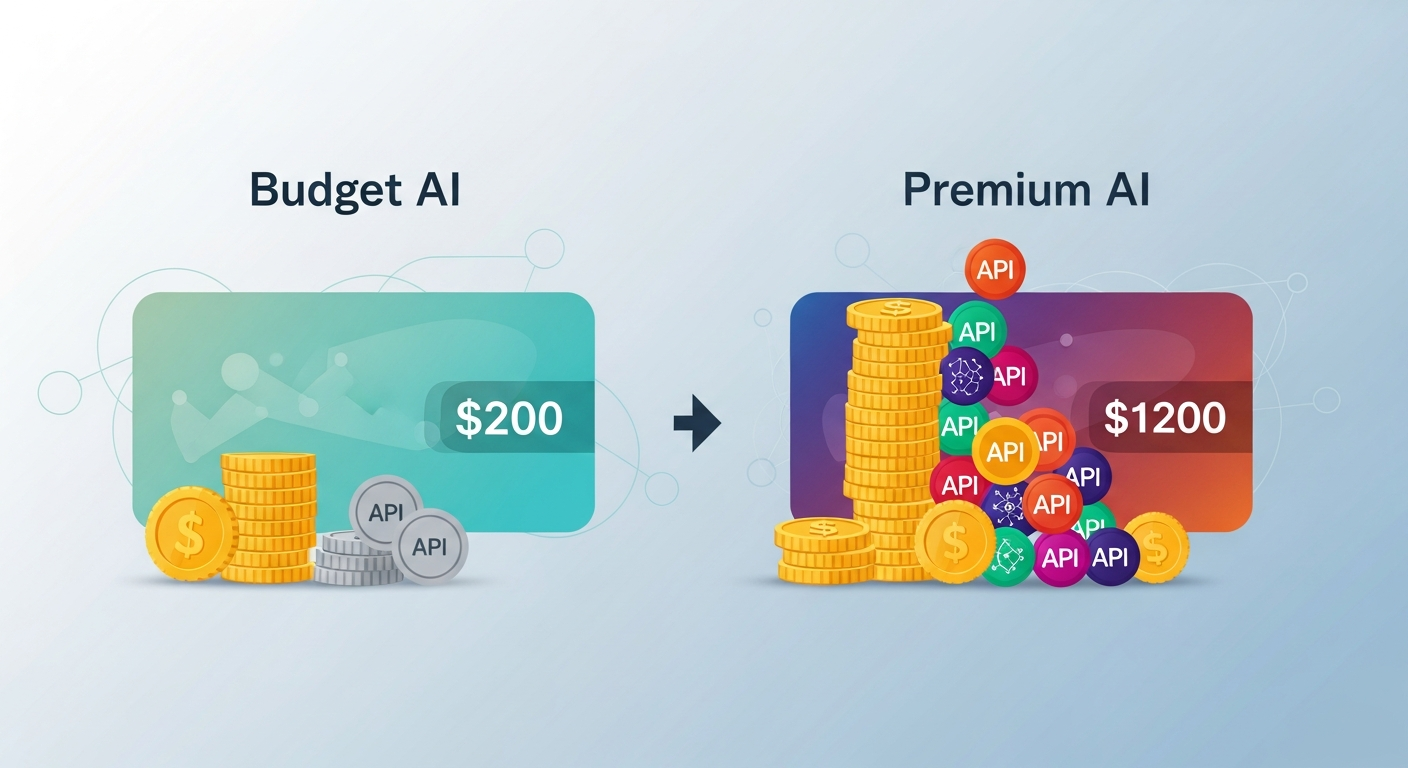
DeepSeek's pricing is the single most disruptive aspect of its launch. The API costs $0.14 per million input tokens (cache hit price) and $2.19 per million output tokens. Compare that to OpenAI's o1 pricing at $15 per million input tokens and $60 per million output tokens. That is not a typo — we are talking about a 100x difference on input and a 27x difference on output.
| Model | Input (per 1M tokens) | Output (per 1M tokens) | Relative Cost |
|---|---|---|---|
| DeepSeek R1 (API) | $0.14 | $2.19 | 1x (baseline) |
| Claude Sonnet 4 | $3.00 | $15.00 | ~7-21x |
| GPT-4o | $2.50 | $10.00 | ~5-18x |
| Claude Opus 4 | $15.00 | $75.00 | ~34-107x |
| OpenAI o1 | $15.00 | $60.00 | ~27-107x |
What This Means for Developers
If you are building an application that processes millions of tokens daily — think document analysis, customer support bots, or data extraction pipelines — the cost difference is substantial. A workflow costing $1,000/month on OpenAI o1 could run for roughly $30-50/month on DeepSeek R1 with comparable quality on many tasks.
But cost is not everything. DeepSeek's API has experienced significant uptime issues, with multiple extended outages reported throughout 2025. Latency is also higher on average compared to OpenAI and Anthropic's infrastructure, particularly during peak hours.
The Open-Source Factor
DeepSeek R1 is released under an MIT license, which means you can download the model weights, fine-tune them, and run inference on your own hardware without paying API fees at all. This is a significant advantage for organizations with the GPU infrastructure to self-host. Neither OpenAI nor Anthropic offer anything comparable — their models are strictly API-only.
Self-hosting DeepSeek R1 requires substantial hardware (the full model needs multiple high-end GPUs), but quantized versions can run on more modest setups. This has led to a growing set of optimized deployments on platforms like Ollama and vLLM.
Coding and Developer Experience
Real-World Code Generation
Benchmarks tell one story; daily coding sessions tell another. After months of using all three models for actual development work, here is how they compare across common developer tasks:
| Task | Best Model | Notes |
|---|---|---|
| Bug fixing in large codebases | Claude Opus 4 | 200K context window handles full repo context |
| Algorithm implementation | DeepSeek R1 | Chain-of-thought reasoning excels at complex logic |
| Full-stack web development | GPT-4o | Broadest training on web frameworks and patterns |
| Code review and refactoring | Claude Opus 4 | Excellent at explaining reasoning behind suggestions |
| Quick utility scripts | DeepSeek V3 | Fast and cheap for simple tasks |
| API integration | GPT-4o | Best documentation coverage for popular APIs |
Agentic Coding Capabilities
The rise of agentic AI workflows has changed how developers interact with these models. Claude has emerged as the frontrunner in agentic coding through Claude Code, which can autonomously navigate codebases, run tests, and iterate on solutions. OpenAI's Codex agent offers similar capabilities within ChatGPT. DeepSeek has not yet shipped a dedicated agentic coding tool, though its open-source nature means third-party integrations (like Continue and Cursor) support it natively.
IDE Integration
ChatGPT integrates with virtually every IDE through GitHub Copilot (powered by OpenAI models). Claude is available in Cursor, Windsurf, and its own Claude Code CLI. DeepSeek can be plugged into any tool that supports custom OpenAI-compatible endpoints, giving it flexibility but requiring more setup effort.
Writing, Reasoning, and Creative Tasks
Long-Form Writing Quality
Writing quality is subjective, but patterns emerge after extensive use. Claude consistently produces the most natural-sounding prose — fewer cliches, better paragraph flow, and a stronger sense of voice. GPT-4o is the most versatile, adapting well to different tones and styles on request. DeepSeek V3 produces competent text but tends toward a more formulaic structure, and its writing occasionally reveals translation artifacts from its Chinese-language training data.
For creative writing specifically — fiction, marketing copy, brainstorming — Claude and GPT-4o are in a class above DeepSeek. For technical documentation and structured reports, all three perform well.
Multi-Step Reasoning
When it comes to problems requiring extended chains of reasoning — think multi-step math proofs, legal analysis, or complex strategic planning — the reasoning-focused models (DeepSeek R1 and OpenAI o1) significantly outperform their general-purpose counterparts. R1's visible chain-of-thought is particularly useful because you can spot where its reasoning goes wrong and course-correct.
Claude Opus 4 takes a middle path: it does not have a separate "reasoning mode" but incorporates strong reasoning throughout its responses. For problems that require both deep thinking and clear communication, it often produces the most practically useful output.
Multimodal Capabilities
GPT-4o leads in multimodal capabilities with native image, audio, and video understanding. Claude supports image input with strong visual reasoning. DeepSeek V3 added image understanding in late 2025, but it lags behind the other two in accuracy and nuance for visual tasks. None of the three match Google's Gemini for multimodal breadth, but that is a comparison for another article.
Privacy, Censorship, and Enterprise Readiness
The China Factor
DeepSeek is developed by a Chinese AI lab, and its API routes data through servers located in China. This is a dealbreaker for many organizations. Under Chinese data laws, the government can compel companies to provide access to stored data, which means anything you send through DeepSeek's API is potentially accessible to Chinese authorities.
For individual developers building personal projects, this may not matter. For enterprises handling customer data, healthcare information, financial records, or anything subject to GDPR, HIPAA, or SOC 2 compliance — using DeepSeek's hosted API is likely a non-starter.
The open-source option mitigates this entirely: self-host the model and your data never leaves your infrastructure. But that requires significant technical investment.
Content Censorship
DeepSeek applies strict censorship on political topics, particularly those sensitive to the Chinese government. Questions about Taiwan, Tiananmen Square, Xinjiang, or Chinese political leadership will receive evasive or refused responses. This censorship also bleeds into adjacent topics — I have seen it refuse to compare political systems or discuss certain aspects of Chinese economic policy.
ChatGPT and Claude have their own content restrictions, but these are primarily focused on preventing harm (violence, illegal activities, CSAM) rather than political censorship. Both will discuss sensitive political topics with appropriate nuance.
Enterprise Features Comparison
| Feature | DeepSeek | ChatGPT / OpenAI | Claude / Anthropic |
|---|---|---|---|
| SOC 2 Compliance | No | Yes (Type II) | Yes (Type II) |
| HIPAA BAA Available | No | Yes (Enterprise) | Yes (Enterprise) |
| Data Residency Options | China only (API) | US, EU | US, EU |
| SSO / SAML | No | Yes | Yes |
| Self-Hosting | Yes (MIT license) | No | No |
| Fine-Tuning | Yes (open weights) | Yes (API) | Limited |
| SLA Guarantee | No | Yes (Enterprise) | Yes (Enterprise) |
| Admin Console | Basic | Full | Full |
How to Choose the Right AI Model in 2026
Choose DeepSeek If...
- Budget is your primary constraint. At $0.14/$2.19 per million tokens, nothing else comes close for high-volume API usage.
- You want to self-host. The MIT license and open weights make DeepSeek the only viable option for on-premise deployment among the top-tier models.
- You need strong math/reasoning at low cost. R1's benchmark performance matches o1 at a tiny fraction of the price.
- You are building open-source tools or research projects. The MIT license imposes zero restrictions on commercial use.
Choose ChatGPT / OpenAI If...
- You need the broadest platform. Plugins, GPT Store, Copilot integration, DALL-E, Whisper — no one else offers this breadth.
- Multimodal is essential. GPT-4o's native handling of text, images, and audio is best-in-class.
- Your team already uses Microsoft products. Copilot integration across Office 365, Azure, and GitHub is tightly integrated.
- You want the most "batteries included" experience. ChatGPT Plus at $20/month is still the best consumer AI product overall.
Choose Claude / Anthropic If...
- You work with very long documents. The 200K context window with strong recall is unmatched for legal, medical, or research workflows.
- Code quality matters more than speed. Claude's code generation is consistently clean, well-documented, and architecturally sound.
- Safety and alignment are non-negotiable. Anthropic's constitutional AI approach produces the most reliably safe outputs.
- You want the best agentic coding experience. Claude Code is currently the most capable autonomous coding agent.
- Natural writing quality is a priority. Claude produces the least "AI-sounding" prose of the three.
The Hybrid Approach
Increasingly, the smartest strategy is not picking one model but using multiple models for different tasks. Route high-volume, cost-sensitive tasks through DeepSeek. Use Claude for complex coding and long-document analysis. Use ChatGPT for multimodal tasks and quick general queries. Tools like OpenRouter and LiteLLM make it straightforward to implement model routing in your applications.
Frequently Asked Questions
Is DeepSeek really as good as ChatGPT?
On specific benchmarks — particularly mathematics and competitive programming — DeepSeek R1 matches or exceeds GPT-4o and rivals OpenAI's o1. However, ChatGPT maintains advantages in multimodal capabilities, platform breadth, writing versatility, and API reliability. "As good" depends entirely on your use case.
Is it safe to use DeepSeek for business applications?
Using DeepSeek's hosted API means your data passes through Chinese servers, which is a compliance concern for many businesses. If you self-host the open-source model on your own infrastructure, data privacy is fully under your control. For regulated industries (healthcare, finance, government), self-hosting is the only viable path with DeepSeek.
Can DeepSeek replace Claude for coding?
DeepSeek R1 is excellent at algorithmic problems and competitive programming challenges. However, Claude Opus 4 outperforms it on real-world software engineering tasks — particularly those involving large codebases, code review, and maintaining architectural consistency across a project. For professional development work, Claude remains the stronger choice. For learning and algorithmic practice, DeepSeek R1 is a cost-effective alternative.
Why is DeepSeek so much cheaper than OpenAI and Anthropic?
Three factors drive DeepSeek's low costs: the MoE architecture (671B total parameters but only 37B active, reducing compute per inference), lower labor and infrastructure costs in China, and a strategic business decision to gain market share through aggressive pricing. Some industry observers question whether this pricing is sustainable long-term, but DeepSeek's backers (the Chinese hedge fund High-Flyer) appear willing to subsidize growth.
Which AI model is best for students and researchers?
For students on a budget, DeepSeek offers the best value — strong reasoning capabilities at minimal cost, with a generous free tier. For academic researchers who need to process long papers, Claude's 200K context window is invaluable. ChatGPT Plus ($20/month) offers the most well-rounded experience with web browsing, code execution, and file analysis built in. Many researchers use all three depending on the task at hand.
Sources
- DeepSeek-R1: Incentivizing Reasoning Capability in LLMs via Reinforcement Learning (arXiv)
- GitHub — DeepSeek-R1 (MIT License, Model Weights)
- GitHub — DeepSeek-V3 (Architecture, Training Details)
- DeepSeek API — Pricing (Official)
- OpenAI API — Pricing (Official)
- Anthropic — Claude Model Documentation
- SWE-bench — Software Engineering Benchmark
- VentureBeat — DeepSeek R1 Matches OpenAI o1 at 95% Less Cost